
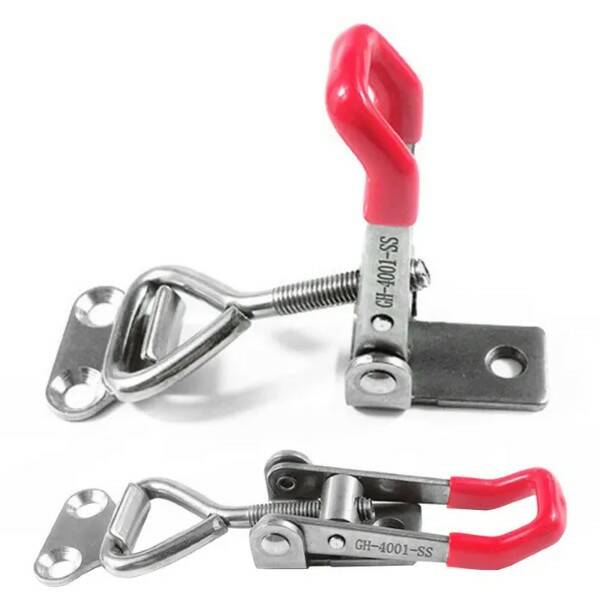
A clamp is a woodworking tool used to hold two or more pieces of material together while they are being joined or worked on. There are many types of clamps available, each designed for different purposes and preferences.
Some common types of woodworking clamps include:
- Bar clamps: Bar clamps are one of the most common types of woodworking clamps. They consist of a long metal bar with a movable jaw at one end and a fixed jaw at the other. The jaws are tightened using a screw mechanism to hold the material being worked on in place.
- C-clamps: C-clamps are another common type of woodworking clamp. They consist of a fixed jaw and a movable jaw that is tightened using a screw mechanism. They are often used for smaller woodworking projects or for holding material in place while glue dries.
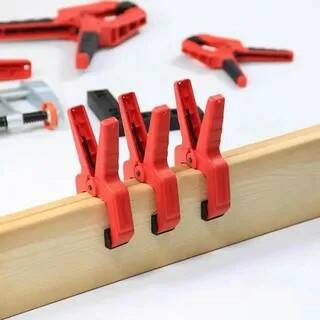
- Spring clamps: Spring clamps are small, lightweight clamps that are often used for holding material together temporarily. They consist of two jaws that are held together by a spring mechanism and can be easily opened and closed with one hand.
- Pipe clamps: Pipe clamps are designed to hold large or irregularly shaped material. They consist of a metal pipe with fixed and movable jaws that are tightened using a screw mechanism. They can be used for a wide range of woodworking projects, from building furniture to constructing outdoor structures.
- Lever latch for woodworking: A lever latch is a type of clamp used in woodworking that consists of a pivoting lever that tightens the jaws of the clamp. Lever latches are often used for holding material in place while glue dries or for joining pieces of material together.
When choosing a woodworking clamp, it’s important to consider the type of project being worked on and the size and weight of the material being held. It’s also important to make sure that the clamp is properly tightened and positioned to prevent the material from shifting or slipping during use.
Bar clamps:
Bar clamps are essential tools for woodworking. They are used to hold pieces of wood together during glue-up, assembly, or other woodworking tasks that require clamping. Bar clamps consist of a bar or rod, a fixed jaw, and a sliding jaw. The fixed jaw is attached to the bar or rod, while the sliding jaw can be moved along the bar to adjust the clamping pressure.
Bar clamps are available in different lengths and capacities, so you can choose the right clamp for the job at hand. They come in handy for various woodworking tasks, such as edge gluing, laminating, and clamping cabinet parts together. They are easy to use, and their design allows for even pressure distribution, preventing uneven clamping that can cause warping or distortion.
When using bar clamps, it’s essential to ensure that the jaws are parallel to each other and that the pressure is evenly distributed across the workpiece. You should also use scrap pieces of wood between the clamp and the workpiece to prevent damage to the wood’s surface.
C-clamps:
C-clamps are another type of clamp that is commonly used in woodworking. They are named after their shape, which resembles the letter “C.” C-clamps consist of a fixed jaw and a movable jaw that is attached to a threaded screw. The screw is turned to apply clamping pressure, and the jaws can be moved along the screw to adjust the clamping width.
C-clamps come in a variety of sizes, from small models that are suitable for light-duty clamping to larger models that can handle heavier loads. They are versatile tools that can be used for a wide range of woodworking tasks, such as holding pieces of wood together during glue-up, securing workpieces to a workbench, or clamping jigs and fixtures in place.
When using C-clamps, it’s essential to ensure that the jaws are parallel to each other and that the pressure is evenly distributed across the workpiece. You should also use scrap pieces of wood between the clamp and the workpiece to prevent damage to the wood’s surface. Additionally, you should be careful not to over-tighten the clamp, as this can cause the wood to warp or distort.
Spring clamps:
Spring clamps are a type of clamp commonly used in woodworking that are named after their mechanism. They consist of two arms with jaws that are connected by a spring. To use a spring clamp, you simply squeeze the two arms together to open the jaws, and release them to apply clamping pressure.
Spring clamps are available in a range of sizes, from small models that are suitable for holding small pieces of wood together during glue-up, to larger models that can be used for more heavy-duty clamping tasks. They are versatile tools that can be used for a variety of woodworking tasks, such as holding pieces of wood together during glue-up, securing workpieces to a workbench, or clamping jigs and fixtures in place.
One of the benefits of using spring clamps is that they are easy to use and can be quickly applied and removed. However, they do have some limitations. Spring clamps typically don’t provide as much clamping pressure as other types of clamps, such as bar clamps or C-clamps. Additionally, the jaws on spring clamps can be quite small, which can make them difficult to use on larger workpieces. Therefore, spring clamps are best used for lighter-duty clamping tasks or as a supplement to other clamps.
Pipe clamps:
Pipe clamps are a type of clamp commonly used in woodworking that consist of a long pipe or bar with fixed and sliding jaws that can be adjusted to clamp workpieces of different sizes. The pipe or bar can be made of metal or wood, and the jaws are typically made of plastic or metal.
One of the benefits of using pipe clamps is that they can provide a lot of clamping pressure and are capable of handling larger workpieces. They are also versatile and can be used for a variety of woodworking tasks, such as edge gluing, laminating, and clamping cabinet parts together.
To use a pipe clamp, you need to first attach the fixed jaw to one end of the pipe or bar and then slide the sliding jaw to the other end. You can then adjust the position of the sliding jaw to fit the workpiece and tighten the clamp by turning the handle on the sliding jaw.
One of the drawbacks of using pipe clamps is that they can be https://www.buydo.eu more cumbersome to use than other types of clamps, such as spring clamps or bar clamps. Additionally, they can be more expensive to purchase than other types of clamps. However, if you need a clamp that can handle larger workpieces and provide a lot of clamping pressure, a pipe clamp can be an excellent choice.
Lever latch for woodworking
The lever latch works by using a cam mechanism to tighten the jaws of the clamp. When the lever is in the open position, the jaws are free to move apart, allowing the material to be inserted. Once the material is in place, the lever is rotated, which moves the cam and tightens the jaws around the material. The lever can be easily released to remove the material once the glue has dried or the joinery has been completed.
Lever latches come in a variety of sizes and styles, ranging from small clamps designed for delicate work to larger clamps designed for heavy-duty projects. They can be made from a variety of materials, including metal and plastic, and can be used for a wide range of woodworking tasks, from building furniture to constructing cabinets.
When using a lever latch in woodworking, it’s important to make sure that the material being clamped is properly aligned and positioned to prevent shifting or slipping during use. It’s also important to apply the appropriate amount of pressure to the clamp to ensure a strong, secure hold without damaging the material.
Application of Clamping Woodworking tools
Clamping is an essential woodworking technique that involves holding a workpiece securely in place to allow for precise cutting, shaping, or sanding. There are several woodworking tools used for clamping, including:
- Bar Clamps: These are versatile clamps that consist of a fixed bar and a sliding clamp jaw that can be adjusted to the desired width. They are ideal for large woodworking projects that require a lot of pressure.
- Pipe Clamps: These are similar to bar clamps, but they use a pipe instead of a fixed bar. They are often used for longer lengths and are ideal for clamping large workpieces.
- Spring Clamps: These are small, lightweight clamps that are ideal for holding small pieces in place or for applying light pressure.
- C-Clamps: These are strong, sturdy clamps that are shaped like the letter “C.” They are versatile and can be used for a wide range of woodworking projects.
- Hand Screws: These are traditional wooden clamps that consist of two wooden jaws that can be tightened with a screw. They are ideal for holding irregularly shaped workpieces.
Clamping tools are used to hold a workpiece securely in place, which is important for ensuring accuracy and safety when cutting or shaping wood. They allow woodworkers to work more efficiently and effectively by providing a stable work surface that reduces the risk of injury and error. Clamping tools can be used for a wide range of woodworking tasks, from holding boards together for gluing to securing pieces for drilling or sanding.
Leave a Reply
You must be logged in to post a comment.